
Portable fuel cell generators,
from 250W to 3kW.
Silent, zero-emission power you can carry — from 7.9 kg, with native 24V / 48V DC output and an optional inverter for standard AC loads. Built for home backup, field work and off-grid sites.

Why a Portable Fuel Cell Generator
Silent & Zero-Emission
No combustion, no exhaust after-treatment, no noise complaints. A portable fuel cell generator runs cleanly next to people, equipment and in emission-restricted zones where a diesel genset is not welcome.
Grab-and-Go Power
From 7.9 kg upward, these are genuine carry-on power units. Connect a standard hydrogen cylinder, press start, and be producing power in minutes — at a tower site, a field camp or an emergency scene.
DC-Native, AC-Ready
Native 24V / 48V DC connects directly to battery banks, DC buses and telecom power systems. Add a suitably sized inverter and standard AC loads run too.
No Coolant, No Fuss
Built on our air-cooled stack platform: no pump, no radiator, no coolant loop. Fewer parts means higher reliability and maintenance that takes minutes, not hours.
How the System Works
A portable fuel cell generator is a complete power chain in one box. There is no engine to start and no fuel to pour — just hydrogen from a standard cylinder, converted directly into electricity:
1 · Hydrogen Supply
A standard compressed-hydrogen cylinder feeds the unit at low pressure (0.6–0.7 bar). The 250W model ships with a regulator for common 1.6 MPa cylinders — open the valve and the fuel side is ready.
2 · Fuel Cell Stack
Inside, a PEM air-cooled stack converts hydrogen and oxygen from the air directly into DC electricity through an electrochemical reaction — no combustion, no moving parts in the power stage.
3 · DC Output
24V or 48V DC is available natively at the terminals — the same voltage class used by battery banks, telecom equipment and vehicle systems, so integration is direct.
4 · AC Loads (Optional)
Pair any model with a suitably sized DC/AC inverter to run standard household and tool loads. For built-in three-phase AC and higher power, see the water-cooled generator line.
Model Lineup
| Model | HX-250W-AG | HX-1K-AG | HX-1.5K-AG | HX-2K-AG | HX-3K-AG |
|---|---|---|---|---|---|
| Rated power | 250 W | 1 kW | 1.5 kW | 2 kW | 3 kW |
| Output voltage | 24V DC | 24V DC | 24V DC | 24V DC | 48V DC |
| Efficiency | ≥40% | ≥40% | ≥40% | ≥40% | ≥40% |
| Hydrogen consumption | 2.8 L/min | 19 L/min | 28.5 L/min | 38 L/min | 48.5 L/min |
| Hydrogen supply pressure | 0.6–0.7 bar (all models) | ||||
| Dimensions (mm) | 410×238×195 | 380×210×450 | 380×210×450 | 400×300×430 | 510×400×450 |
| Weight | 7.9 kg | 23 kg | 24 kg | 25 kg | 60 kg |
| Bipolar plate | Metal | Metal | Metal | Metal | Titanium alloy |
All models: PEM fuel cell, air-cooled stack, hydrogen purity ≥99.99% (CO<1ppm), ambient temperature 0–40°C, humidity 10–95%. Zero-emission exhaust — no PM, NOx, SOx, CO or CO₂.
Runtime on One Cylinder
For backup and off-grid duty, runtime is the first question. As a planning estimate, a common 40L cylinder at 15 MPa holds roughly 6,000L of hydrogen. Dividing that by each model’s hydrogen consumption gives approximate full-load runtimes:
| Model | H₂ consumption | Runtime on 6,000L (estimate) |
|---|---|---|
| HX-250W-AG | 2.8 L/min | ≈ 36 hours |
| HX-1K-AG | 19 L/min | ≈ 5.3 hours |
| HX-1.5K-AG | 28.5 L/min | ≈ 3.5 hours |
| HX-2K-AG | 38 L/min | ≈ 2.6 hours |
| HX-3K-AG | 48.5 L/min | ≈ 2.1 hours |
Estimates at continuous full load; real runtime at partial load is longer. Runtime extends by connecting more or larger cylinders — our cylinder bundles and solid state storage scale autonomy from hours to days. Tell us your target and we will size the storage.
The Models
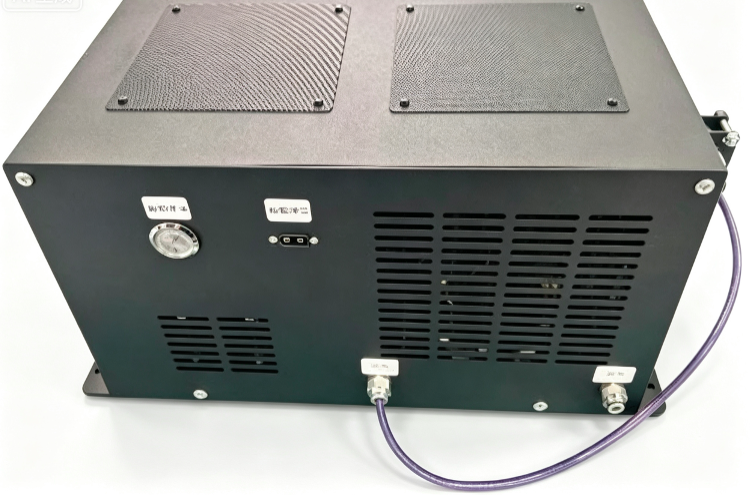
250W Portable Fuel Cell Generator — HX-250W-AG
The lightest way to put hydrogen to work — ships with a regulator for standard 1.6 MPa cylinders: connect, open the valve, press start.
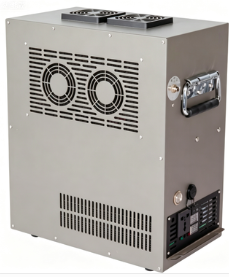
1kW Portable Fuel Cell Generator — HX-1K-AG
Purpose-built for backup duty: a 45-cell metal-plate stack in a slim chassis that slides into equipment racks, shelters and home utility corners.
1.5kW Portable Fuel Cell Generator — HX-1.5K-AG
Fifty percent more power in the same proven enclosure — a common fit for backup loads that outgrow a 1kW unit.
2kW Portable Fuel Cell Generator — HX-2K-AG
Two kilowatts in a 25 kg package one person can still move — for field loads where a battery bank alone runs out too soon.
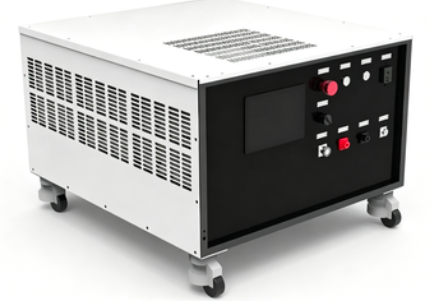
3kW Portable Fuel Cell Generator — HX-3K-AG
The flagship: native 48V DC, titanium-alloy stack, CANbus monitoring and a built-in 1.5 kWh LFP battery that bridges load spikes and cylinder swaps.
Home Backup: What 250W–3kW Actually Runs
In a grid outage, these units are sized for the loads that matter most — not whole-house supply. Here are typical running watts for common essential loads, to help you match a model:
| Essential load | Typical running watts | Covered by |
|---|---|---|
| LED lighting (whole home) | 20–60 W | any model |
| Wi-Fi router & communications | 10–30 W | any model |
| Refrigerator (incl. start surge) | 100–400 W | 250 W – 1 kW |
| Laptop & phone charging | 50–120 W | any model |
| TV or radio | 50–200 W | any model |
| CPAP & small medical devices | 30–90 W | any model |
| Sump pump or furnace blower | 400–1,500 W | 1 kW – 3 kW |
| Electric cooking / water heating / AC | 2,000 W+ | see 5–20kW line |
Wattages are typical ranges, not guarantees — check the nameplate of your own devices. Anything in the 2kW+ continuous class moves beyond portable territory; the water-cooled 5–20kW line covers small buildings and whole-home essentials.
Where It Works
Keep the critical loads running through an outage — refrigerator, lighting, router and communications, small medical devices. Sized for essential circuits, not whole-house supply.
Grab-and-go power for disaster relief, field hospitals and temporary command posts — running in minutes from a standard cylinder.
Small fuel cells for university labs, teaching demonstrations and R&D benches — safe, quiet and simple enough for a classroom.
Cabins, boats and RVs where silence, zero emissions and low weight beat any diesel genset. Swap the cylinder and keep going — no generator noise at the campsite.
48V native output and CANbus monitoring make the 3kW unit a natural battery-bank partner for base stations and remote monitoring sites.
Fume-free, near-silent power for construction sites, outdoor events and temporary facilities — welcome in urban zones where diesel exhaust is not.
Portable Fuel Cell vs Battery vs Diesel
| Portable Fuel Cell | Battery Pack | Diesel Genset | |
|---|---|---|---|
| Emissions | Zero at point of use | Zero at point of use | PM, NOx, CO₂ exhaust |
| Noise | Near-silent | Silent | Loud |
| Runtime | Extends by adding or swapping cylinders | Fixed by battery capacity | Extends with fuel tank size |
| Recharge / refuel | Swap or refill hydrogen supply | Hours of recharging | Refuel with diesel |
| Maintenance | No coolant loop, minimal parts | Minimal | Oil, filters, engine service |
Not sure which power class fits your load? Read our guide: Choosing the Right Hydrogen Fuel Cell.
Frequently Asked Questions
Can a portable fuel cell generator power a home?
Yes for the loads that matter most in an outage — a refrigerator, lighting, internet and communications, or small medical devices — through a suitably sized inverter. It is sized for essential circuits, not whole-house supply. For larger continuous power, see our 5–20kW water-cooled generators.
How long does it run on one cylinder?
As a planning estimate, a 40L @ 15MPa cylinder holds roughly 6,000L of hydrogen — about 36 hours for the 250W model, 5+ hours for the 1kW, or just over 2 hours for the 3kW at full load. Runtime extends by adding cylinders or larger storage; tell us your autonomy target and we will size it.
Can I use it for camping, RV or marine?
Yes — that is one of its best fits. It is near-silent (no generator noise at the campsite), emits nothing at the point of use, and refuels by swapping a cylinder in minutes instead of running a noisy engine for hours. Use it in a ventilated area as you would any fuel-burning or gas-powered equipment.
Does cold weather affect operation?
The specified ambient operating range is 0–40°C. For sustained sub-zero duty, tell us your climate and we will advise on enclosure and pre-heating options.
Can I connect two units together for more power?
The models are not designed to be paralleled out of the box. If your load exceeds 3kW, the cleaner path is the 5–20kW water-cooled line or a system engineered for your site — contact us and we will size it.
Where do I get hydrogen?
Industrial gas suppliers deliver compressed-hydrogen cylinders in most regions. For longer autonomy we supply cylinder bundles and solid state storage; we can advise on sourcing in your country.
Can I take it on a plane?
No. Compressed hydrogen cylinders are regulated dangerous goods — the unit itself travels by standard ground or sea freight, and cylinders are sourced or filled locally. Plan logistics with us before shipping to a project site.
Is it safe to run near people?
Yes. There is no combustion and the exhaust is zero-emission — no PM, NOx, SOx, CO or CO₂ — and operation is near-silent. As with any hydrogen device, follow basic ventilation and handling guidelines.
Do I get AC power from these units?
They output 24V or 48V DC natively; pair any model with a suitably sized DC/AC inverter for standard AC loads. For built-in AC output and higher power, the water-cooled generator line outputs 230V / 380V AC directly.
Can it replace my diesel generator?
For loads up to 3kW where silence, zero emissions or indoor-adjacent operation matter — yes, and with far less maintenance. For higher power or long continuous runs, step up to the water-cooled line.
Tell us your load, we size the rest
Power, voltage, autonomy, weight limit — send us your requirements and our engineers will match a system and hydrogen supply within 24 hours.