
Air-driven gas boosters for hydrogen & industrial gases.
Boost hydrogen, helium, nitrogen, oxygen and more from as low as 0.1 bar inlet up to 800 bar — powered by ordinary 3–8 bar compressed air, intrinsically explosion-proof, with automatic pressure holding at zero standby energy.
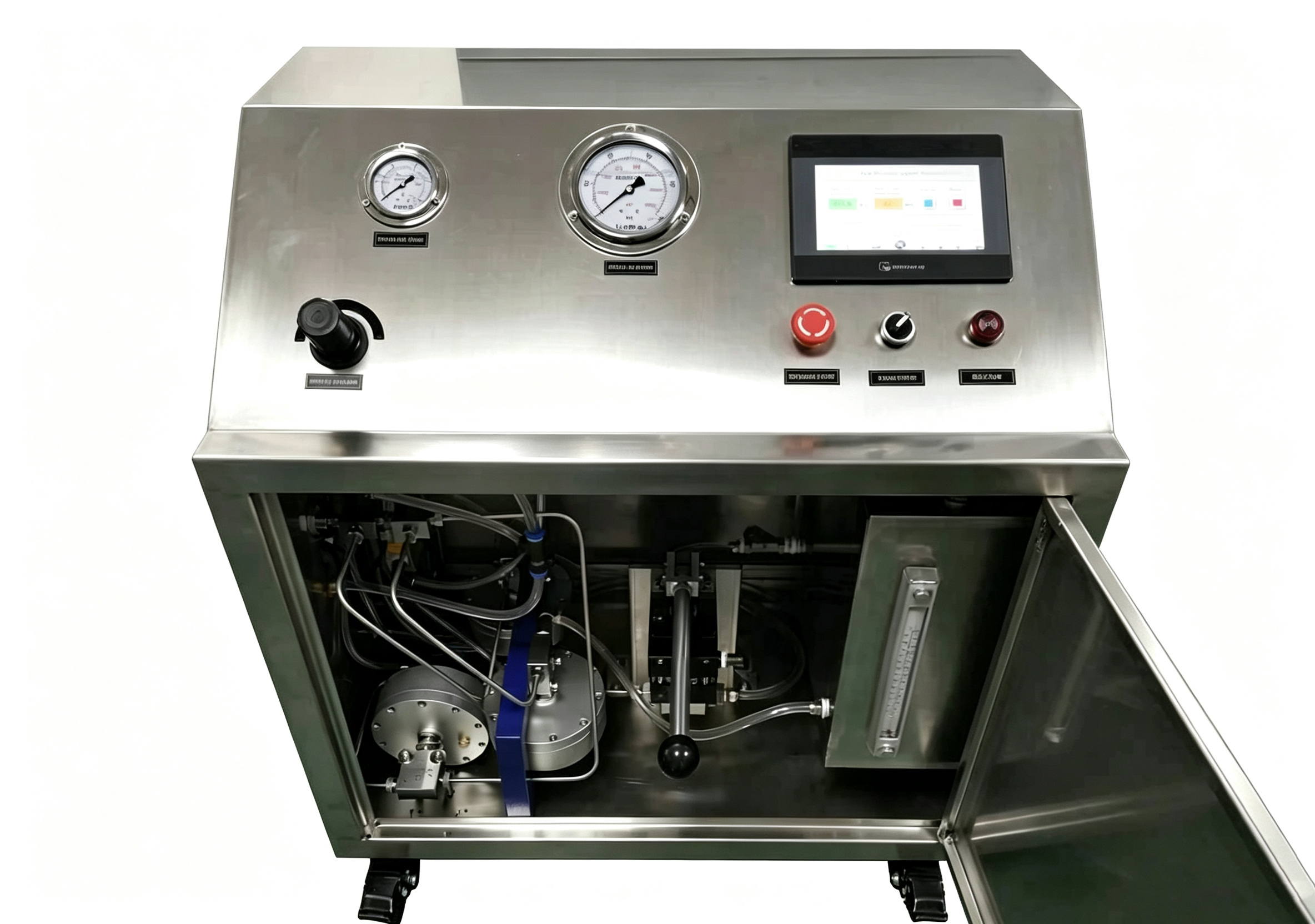
Why Air-Driven Boosters
Explosion-Proof by Design
Driven by compressed air — no motor, no sparks, no ignition source. The straightforward choice for hydrogen and flammable gas environments.
Wide Gas Compatibility
H2, He, N2, O2, Ar, CO2, CH4 and more, with gas-compatible seals and materials selected for each service.
Automatic Pressure Holding
Stalls at set pressure and restarts on pressure drop — zero energy consumption at standby, no operator watching a gauge.
Simple & Durable
Few moving parts, easy maintenance and long service life in continuous industrial duty — no electronics to fail.
How an Air-Driven Gas Booster Works
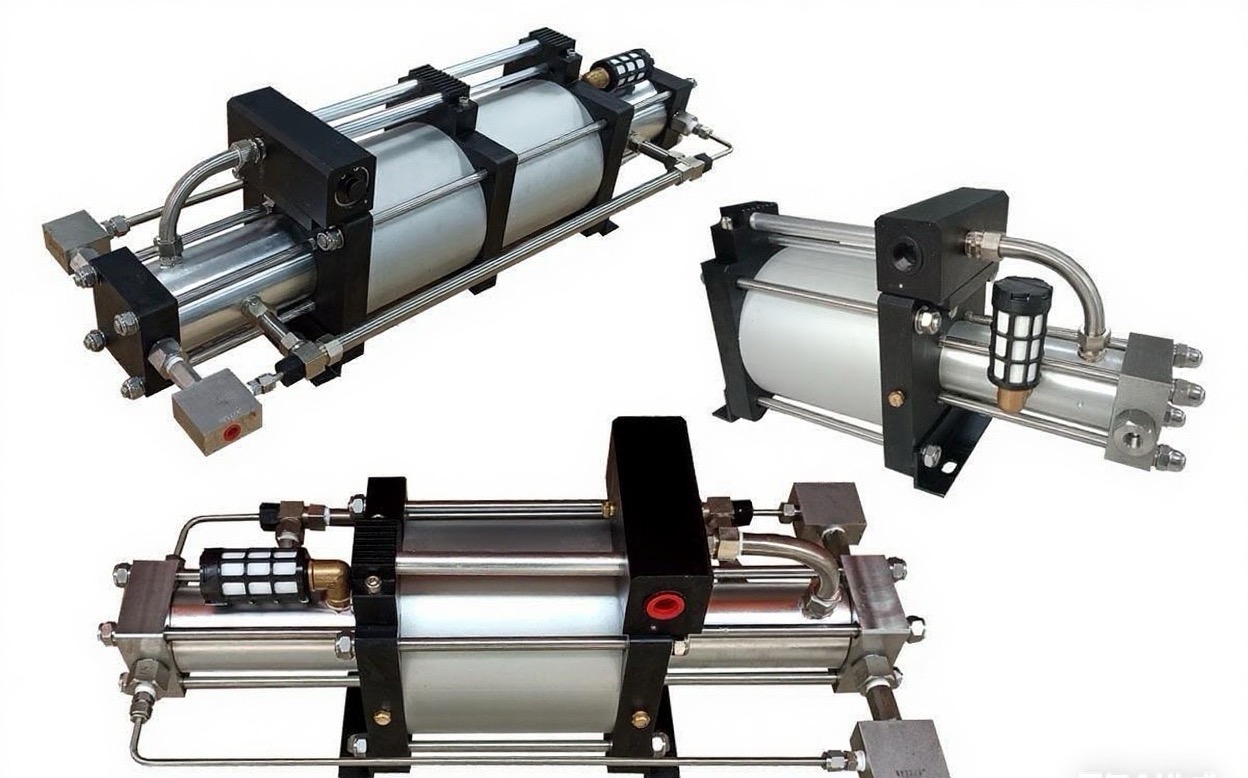
Area-Ratio Pressure Multiplication
A large-area air piston drives a small-area gas piston: outlet pressure equals the drive air pressure multiplied by the boost ratio — 8 bar of shop air behind a 100:1 head means up to 800 bar of gas. When the set pressure is reached the booster stalls automatically and consumes no air at all; when pressure drops, it restarts by itself. No motor, no wiring, no heat build-up — which is exactly why this design is inherently safe for hydrogen.
Model Specifications
All models: driven by 3–8 bar compressed air · G 1/2 drive air port · outlet pressure adjustable · automatic pressure lock & holding.
DGS-DGA Series — Single-Acting, Single-Stage
| Model | Boost Ratio | Min Inlet | Max Outlet | Max Flow |
|---|---|---|---|---|
| DGS-DGA02 | 2:1 | 0.1 bar | 16 bar | 960 Ln/min |
| DGS-DGA05 | 5:1 | 0.1 bar | 40 bar | 680 Ln/min |
| DGS-DGA06 | 6:1 | 2 bar | 48 bar | 360 Ln/min |
| DGS-DGA10 | 10:1 | 3.5 bar | 80 bar | 210 Ln/min |
| DGS-DGA15 | 15:1 | 3.5 bar | 120 bar | 190 Ln/min |
| DGS-DGA25 | 25:1 | 7 bar | 200 bar | 120 Ln/min |
| DGS-DGA40 | 40:1 | 10 bar | 320 bar | 200 Ln/min |
| DGS-DGA60 | 60:1 | 20 bar | 480 bar | 180 Ln/min |
| DGS-DGA100 | 100:1 | 25 bar | 800 bar | 136 Ln/min |
DGS-DGD Series — Double-Acting, Single-Stage
| Model | Boost Ratio | Min Inlet | Max Outlet | Max Flow |
|---|---|---|---|---|
| DGS-DGD07 | 7:1 | 3 bar | 56 bar | 556 Ln/min |
| DGS-DGD10 | 10:1 | 3.5 bar | 80 bar | 410 Ln/min |
| DGS-DGD15 | 15:1 | 5 bar | 120 bar | 350 Ln/min |
| DGS-DGD25 | 25:1 | 10 bar | 200 bar | 396 Ln/min |
| DGS-DGD40 | 40:1 | 15 bar | 320 bar | 320 Ln/min |
| DGS-DGD60 | 60:1 | 25 bar | 480 bar | 215 Ln/min |
DGT Series — Two-Stage
| Model | Boost Ratio | Min Inlet | Max Outlet | Max Flow |
|---|---|---|---|---|
| DGT15 | 15:1 | 0.1 bar | 120 bar | 230 Ln/min |
| DGT25 | 25:1 | 0.1 bar | 200 bar | 156 Ln/min |
| DGT40 | 40:1 | 0.1 bar | 320 bar | 124 Ln/min |
| DGT60 | 60:1 | 0.1 bar | 480 bar | 96 Ln/min |
| DGT100 | 100:1 | 0.1 bar | 800 bar | 82 Ln/min |
DGS-2DGD (double-acting two-stage) series available on request — contact us for the complete datasheet.
How to Select Your Booster in Four Steps
Fix Your Inlet Pressure
Very low inlet (from 0.1 bar)? Go two-stage — DGT series. A steady 2–25 bar supply? Single-stage DGA or DGD covers you.
Fix Your Target Outlet
Max outlet ≈ boost ratio × drive air pressure. Example: 8 bar shop air behind a 100:1 head reaches 800 bar. Pick the ratio that clears your target.
Pick the Series
DGA single-acting for general boosting; DGD double-acting when you need higher flow at the same ratio; DGT two-stage for very low inlet pressure.
Check the Flow
Match the Ln/min column to your duty — or send us gas type, inlet pressure, target pressure and flow, and our engineers will configure the exact model.
Typical Applications
Cylinder Filling & Cascading
Extract full value from every cylinder — transfer gas from low-pressure sources into working storage, automatically and efficiently.
Pressure Testing
Precise high-pressure supply for valves, pipelines, vessels and components — stable pressure with set-and-hold control.
Gas Recovery & Transfer
Recover instead of venting — boost residual helium and process gases back into your system for real savings on expensive gases.
Explosion-Proof Zones
Where electric drives are restricted, air drive means no ignition source — the straightforward choice for Ex-rated areas.
Need electric, oil-free compression instead — or higher continuous flow from low inlet pressure? See our hydrogen compressor range and electric booster series.
Frequently Asked Questions
Why choose air-driven over electric?
In flammable gas environments, an air-driven booster eliminates ignition sources entirely — no motor, no sparks, no Ex certification complexity for the drive unit. For clean, quiet, fully automatic lab duty, see our electric hydrogen boosters.
What drive air supply is needed?
Standard 3–8 bar compressed air from a regular factory air system, connected to a G 1/2 drive air port. No electricity required at all.
Can it compress hydrogen safely?
Yes. HX boosters are widely used for hydrogen service with gas-compatible seals and materials, and the air-driven design means there is no ignition source anywhere in the unit.
What is the difference between a gas booster and a gas compressor?
A booster raises the pressure of an already-pressurized gas supply, driven by compressed air — compact, spark-free and self-stalling at setpoint. A motor-driven compressor delivers higher continuous flow from low inlet pressures. HydroXcel builds both, and our engineers will tell you honestly which fits your duty.
How much drive air does it consume?
Zero at standby — the booster stalls at set pressure and consumes nothing until pressure drops. While pumping, consumption depends on ratio and flow; tell us your duty cycle and we will size the air supply for you.
Can it run unattended?
Yes. Automatic pressure lock and holding means it stops at the set pressure and restarts on pressure drop — overnight cylinder filling and pressure testing need no operator.
Which gases can it handle?
H2, He, N2, O2, Ar, CO2, CH4, C2H2, LNG/LPG/CNG, SF6 and more — seals and gas-contact materials are selected for each specific gas.
Do you support OEM or customized configurations?
Yes — customization without MOQ, one unit is enough. Pressure range, ports and structure tailored to your project, with complete English documentation, remote support and lifetime technical consultation.
Need a Model Selection or Quote?
Send us your gas type, inlet pressure, target pressure and flow — our engineers will respond within 24 hours with a configured solution.